Rome is many things to many people. To me its an inexhaustible fountain of intrigue and connection.
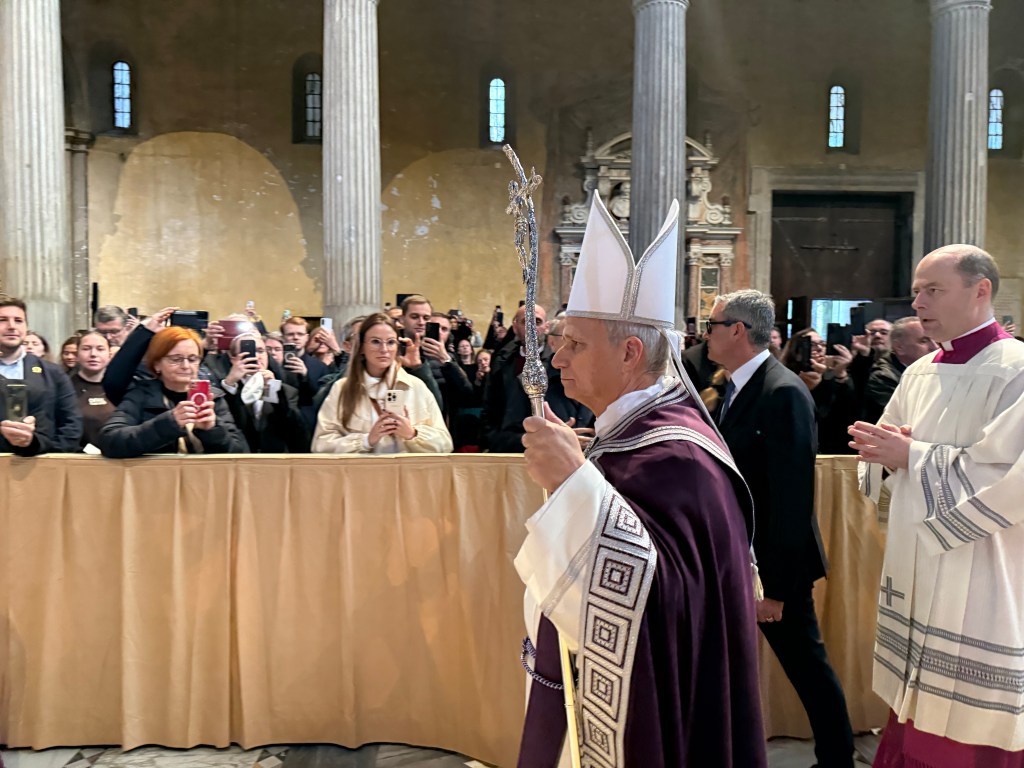
Pope Leo arrives at Saint Sabina for Ash Wednesday Mass on February 18, 2026
Rome is a city of intrigue and connections. Famously, “bread and circuses” distract the public from power’s hidden machinations and “all roads lead to Rome” convey ideas of power and empire. Its a surreal experience to visit the Colisseum and the port of Ostia to see where these phrases took root.
The palimpset which is Rome also includes both ancient remnants and modern institutions of a revolutionary movement that challenged authority and led to the humbling of the strong and the exaltation of the weak. Though that vision is seemingly as far as ever from realization, there have been campaigns of many stripes over the last two mellennia to bring people together in solidarity and compassion.
AI Rewrite
When Pope Leo XIV arrives at Basilica of Saint Sabina for Ash Wednesday Mass, the moment feels less like a single event and more like another thread woven into a tapestry already dense with history, ritual, and power.
Rome has always been a city of intrigue and connections. Phrases like “bread and circuses,” from Juvenal, capture how spectacle can distract from the hidden workings of power, while “all roads lead to Rome” reflects the gravitational pull of empire and influence. To walk through the Colosseum or wander the ruins of Ostia Antica is to step into the physical origins of those ideas—where infrastructure, spectacle, and control once fused into a system that shaped the known world.
Yet Rome is also a palimpsest. Beneath and alongside imperial remains sit the institutions of a movement that once upended hierarchy itself. The message carried forward from figures like Jesus Christ—that the last shall be first, that the weak might be exalted and the mighty brought low—took root here as well, eventually transforming the very structures it once stood against.
That tension has never fully resolved. The city still holds both realities at once: the machinery of power and the critique of power; the spectacle and the call to humility; the permanence of institutions and the persistent idea that they, too, can be overturned.
Across two millennia, countless campaigns—spiritual, პოლიტიკური, cultural—have tried to reconcile those forces or bend them toward one vision or another. None have fully succeeded. And perhaps that is why Rome remains inexhaustible: not because it offers answers, but because it preserves the questions—layered, contested, and alive—within stone, ritual, and memory.
 Connections
Leave a comment